
Monday, May 20, 2013

Muscle Sensor Cables Back In Stock

images by CC BY-NC-SA 3.0


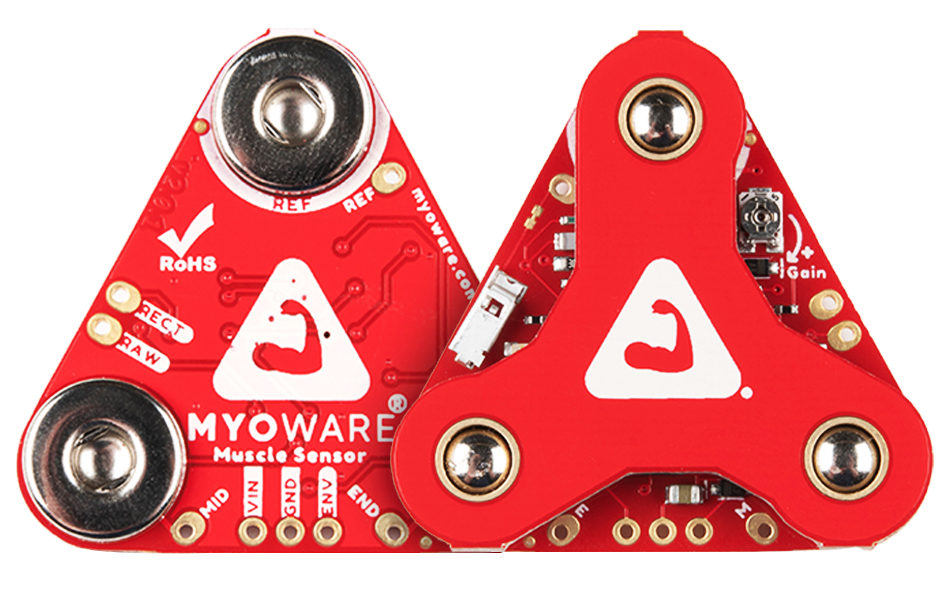
I am pleased to announce that we have received our next shipment of muscle sensor cables. You can now purchase the sensor and cable combo or the cables by themselves on our webstore

Thank you for your patience and again we apologize for the shortage.

Thursday, April 11, 2013

Improved Creative Minds Discount


Here at Advancer Technologies, one of our main goals is to promote all forms of interest and learning into biomechatronic technologies. To help cultivate and educate future great minds and concepts in the field, we frequently post informative instructions and demo video of our technologies.

Join us in our quest by posting your own instructions and demo videos of your projects that incorporate our products and as a reward... 

We'll give you a free muscle sensor
(or a refund of equivalent value on last order)

To receive the discount, you must first do one of the following:
  1. Post instructions on how to build your project on Instructables.com. In the instructions, you must link back to our store website and indicate you used Advancer Technologies sensors.
  2. Publish a video instructions on YouTube.com on how to build your project. In the video description or captions, you must link back to our store website and indicate you used Advancer Technologies sensors.
  3. Publish a demonstration video of your project on YouTube.com. Again, in the video description or captions, you must link back to our store website and indicate you used Advancer Technologies sensors.
Then simply email us the link to your video or instructions and, if you've met our criteria, we'll apply the discount.

Note: Discount limited to one per order and one per project.

Wednesday, April 10, 2013

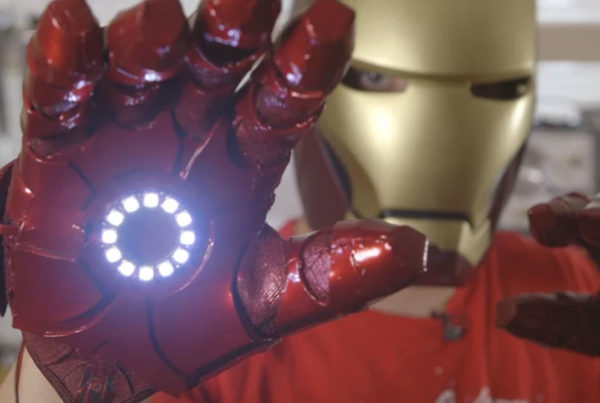
[Tutorial] Bionic Iron Man Armor

Released under CC BY-NC-SA 3.0

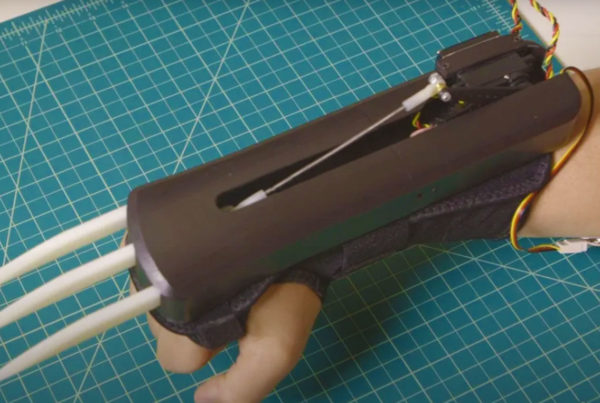
Want to impress your friends? Check out our new Bionic Iron Man Armor tutorial and show up to Iron Man 3 in Stark-worthy style!


Tuesday, March 26, 2013

Muscle Sensor Cables Now IN STOCK

images by CC BY-NC-SA 3.0


I am pleased to announce that we have finally received our anticipated shipment of muscle sensor cables. You can now purchase the sensor and cable combo or the cables by themselves on our webstore

Thank you for your patience and again we apologize for the unanticipated shortage.

The cables are out of stock. We expect to get more in around May 17th. Please email us to be added to the list to be notified when they become available again.

Wednesday, March 20, 2013

[DIY] Conductive Fabric Electrodes

Released under CC BY-NC-SA 3.0
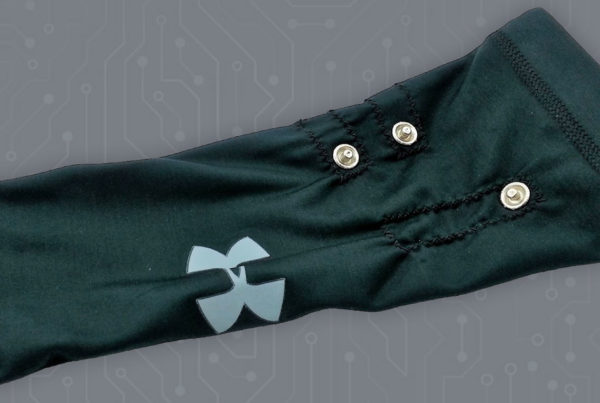
Conductive fabric electrodes are a low cost and simple way to make reusable electrodes for sensing muscle activity. They can be sown into any type of garment or used with a strap. When dampened, these electrodes allow you to sense the tiny electrical signals of your muscles just like traditional medical electrodes. For this tutorial, we're going to use them in a sleeve to detect the muscle activity of the forearm muscles.

Benefits of the conductive fabric electrodes over traditional EMG electrodes:
  • Reusable - traditional EMG electrodes are meant to be used only once and then thrown out. Conductive fabric electrodes can be used over and over again simply by applying some water before use.
  • No adhesive - traditional EMG electrodes use adhesives to stick to your skin. This adhesive can be some what of a pain to remove after use and can cause skin irritation to some people.

Benefits of the traditional EMG electrodes over conductive fabric electrodes:
  • Ready to use - you can simply buy these electrodes off the shelf and use them right away.
  • Can be placed on any muscle - conductive fabric electrodes are sown into garments making so they can only be used by the intended muscle group the garment is matched with. Traditional electrodes can be simply place on any muscle group you might want to use as the trigger muscle.

Materials


Step 1 - Preparing the Conductive Fabric Strips


To make a conductive fabric electrode sleeve, we'll need to make three contact points above the muscle we want to sense. In this case, we're after the forearm muscles.
  1. Cut out three rectangular strips of the conductive fabric. Two of the strips should be W 5/8" x L 1 3/4". The third strip should be W 5/8" x L 2".
  2. Take the forearm sleeve, turn it inside out, and put it on the opposite arm that it is intended to go on.
  3. Using fabric pins, pin the two shorter strips on your forearm muscle such that one is in the middle of the muscle body and the other is about an inch apart. Pin the third strip along the back side of your forearm (on the bony part). Check out the pictures to see how to orient the strips.
  4. Carefully take the sleeve off and you're ready to start sowing.


Step 2 - Sewing the Conductive Strips


Since the sleeve is very stretchy, we'll need to use a stitch that will give us the kind of flexibility we need and also keep the conductive fabric in place. 

Luckily, we've got the zigzag stitch. The zigzag stitch is basically an overcast stitch in both directions. Use a zigzag stitch to sew each of the conductive fabric strips to the sleeve.

Note: Since you'll be wetting these strips before each use, you can also use a waterproof backing (like neoprene fabric or thin rubber) to help keep the moisture in one place. If you use backing, use the zigzag stitch to first attach the conductive fabric strips to the backing material strips, then use the zigzag stitch to sew the backing to the sleeve.


Step 3 - Adding the Electrode Cable Snaps

By this point, we have the conductive fabric strips securely sewn into the sleeve, but we still need a way to attach the electrode cables to the sleeve.
  1. Using the button snap kit, attach a male snap to each of the conductive fabric strips. Make sure the male side is on the outer side of the sleeve as shown in the picture. The snaps can be placed any where along the strips but should be placed where the three cable lead ends can easily reach it.
  2. After the snaps have been attached, use a multimeter to test the connection between each snap and its conductive fabric strip. To do this, simply place on probe against the conductive fabric strip and the other probe on the snap.

If each connection is in working order, then you're finished! 

Sunday, February 17, 2013

Muscle Sensor v3 Now On Sale!

images by CC BY-NC-SA 3.0

We are proud to announce our next generation Muscle Sensor. Our third generation sensor has a on-board port to directly connect our new cables right out of the box. No more hassle with getting the cables to connect to the sensor. 

Our new sensors also come standard with a set of cables and sample electrodes yet still costs a fraction of the V2 sensors!


Friday, April 13, 2012

Muscle Sensor v2 Manual is Now Available

It's been a long time in the making, but we've finally gotten around to putting together a manual for our sensors. The Muscle Sensor v2 Manual includes easy to follow setup steps and examples on how to connect our sensors to the ever popular Arduino MCU as well as all technical specifications.


Click the link above or head over to the Muscle Sensor v2 page to check it out!

Tuesday, April 3, 2012

Announcing Our Next Generation Muscle (EMG) Sensor

images by CC BY-NC-SA 3.0

We are proud to announce our next generation Muscle (EMG) Sensor. Our second generation sensor has shrunk to 1" to a side, over half the size of our Platinum Sensors! 

Not only has this new line of sensor dropped down in size but, thanks to our new fabrication partner, the price has substantially dropped as well.

Friday, December 16, 2011

Check out our latest tutorial - USB Biofeedback Game Controller


Advancer Technologies’ “USB Biofeedback Game Controller” harnesses the power of electromyography to allow players to directly control video games with their muscles. At the core of this plug-in-play controller is the powerful yet low-cost Arduino UNO microcontroller, a favorite among hobbyist and students, acting as a HID keyboard interface. Integrated with the Arduino UNO are four of Advancer Technologies’ new Platinum Series Muscle Sensors, allowing four muscles to act independently or in combination with each other to control over four buttons. In their setup, Advancer Technologies elected to use a six button setup with the left forearm controlling the B button (RUN/ATTACK), the right forearm controlling the A button (JUMP), the left bicep controlling the LEFT button, the right bicep controlling the RIGHT button, and combinations for UP and DOWN.
During gameplay, the Arduino UNO program constantly senses the muscle activity of each muscle via the muscle sensors. When the player flexes a muscle, the Arduino registers a spike in muscle activity, triggering a button press, and sends this information to the computer via USB connection, all in real-time.
You can learn how to build your own controller by reading Advancer Technologies’ easy to follow tutorial posted on Instructables.com. These illustrated instructions go through each step in detail to reproduce and program this remarkable controller.

Tuesday, November 1, 2011

Announcing the Creative Minds Discount

Here at Advancer Technologies, one of our main goals is to promote all forms of interest and learning into biomedical technologies. To help cultivate and educate future great minds and concepts in the field, we frequently post informative instructions and demo video of our technologies.

Join us in our quest by posting your own instructions and demo videos of your projects that incorporate our products and as a reward... 


We'll give you a 10% discount on your purchase!

To receive the discount, you must first do one of the following:

  1. Post instructions on how to build your project on Instructables.com. In the instructions, you must link back to our store website and indicate you used Advancer Technologies sensors.
  2. Publish a video instructions on YouTube.com on how to build your project. In the video description or captions, you must link back to our store website and indicate you used Advancer Technologies sensors.
  3. Publish a demonstration video of your project on YouTube.com. Again, in the video description or captions, you must link back to our store website and indicate you used Advancer Technologies sensors.
Then simply email us the link to your video or instructions and, if you've met our criteria, we'll refund you 10% of your last order.

Note: Discount limited to one per order and one per project.

Wednesday, October 5, 2011

Now selling Muscle Sensor / EMG Circuit Kit- Gold Package Internationally!

We're proud to announce that we are now going to start shipping our Muscle Sensor / EMG Circuit Kit- Gold Package to customers overseas. We would like to thank all those international customers who have showed an overwhelming interest in purchasing our products.

Click here to find out more.

Thursday, September 22, 2011

All EMG Circuit Board Kits are now back in stock

Silver and Gold EMG circuit kits are no longer back ordered. The kits are now ready and will ship within 24-48 hrs of ordering.

I want to thank everyone who placed Silver and Gold EMG kit orders for waiting and being patient for our parts to come in.

For everyone that has been holding off on ordering a kit...order yours now before we run out again!

Tuesday, August 30, 2011

Circuit Boards Back Ordered

Due to another unexpected increase in demand, our Silver and Gold kits are currently sold out and on back order. We expect to receive new shipments of the boards within 1-2 weeks. Bronze kits orders will not be effected.

Sorry for the inconvenience and feel free to email us with any questions or concerns with your order.

Tuesday, August 9, 2011

Now Selling EMG Kits Internationally

We are proud to announce our international friends can now purchase our EMG kits from our webstore.

More information can be found in our store.

Send all questions or concerns to AdvancerTechnologies@gmail.com.

All EMG Circuit Board Kits In Stock

Silver and Gold EMG circuit kits are no longer back ordered. The kits are now ready and will ship within 24-48 hrs of ordering.

I want to thank everyone who placed Silver and Gold EMG kit orders for waiting and being patient for our parts to come in.

For everyone that has been holding off on ordering a kit...order yours now before we run out again!

Saturday, July 16, 2011

Circuit Boards Backordered

Due to overwhelming popularity, all kits that include our EMG circuit boards will be delayed 2-3 weeks until we receive our next shipment. This includes the silver and gold packages. Bronze package orders will not be effected and should ship 24-48 hrs from when the order is placed.


Sorry for the inconvenience and feel free to email us with any questions or concerns with your order.

Wednesday, July 6, 2011

Featured On Hackaday.com

Check it out... our EMG instructable was featured on the DIY website HackADay.com!

Monday, July 4, 2011

Troubles with Check Out

We were just notified our "Add to Cart" buttons weren't working. We have fixed the issue and the store should be back up and running now.

Sorry for the inconvenience folks!

Monday, June 27, 2011

DIY Muscle Sensor / EMG Circuit for a Microcontroller


Measuring muscle activation via electric potential, referred to as electromyography (EMG) , has traditionally been used for medical research and diagnosis of neuromuscular disorders. However, with the advent of ever shrinking yet more powerful microcontrollers and integrated circuits, EMG sensors have found their way into prosthetics, robotics and other contol systems. Yet, EMG systems remain expensive and mostly outside the grasp of modern hobbyist.

This instructable will teach you how to make your own muscle sensor to be incorporated in your next project. Use it to control video games, robot arms, etc all with your muscles!

http://www.instructables.com/id/Muscle-EMG-Sensor-for-a-Microcontroller/